maserta
 Every early October, thousands of schools, planetariums, astronomy clubs, and space agencies in many countries celebrate the same week: World Space Week. World Space Week 2026 ran from 4 to 10 October under the theme "Rocket Revolution". The week itself has passed, but the message behind it remains relevant, especially if you want to understand why space feels closer and closer to everyday life.
What World Space Week Is
World Space Week is an annual celebration of the contribution of space science and technology to human progress. The United Nations General Assembly established it through Resolution 54/68 in 1999. It is not run by a single country. Instead it is organized by many local hosts: schools, science museums, universities, and space organizations. That is why activities vary so much, from exhibitions and drawing contests to group stargazing.
Why 4 to 10 October
Those two dates were chosen to commemorate two important events:
- 4 October 1957. The launch of Sputnik 1, the first artificial satellite to orbit Earth. It marked the start of the space age.
- 10 October 1967. The Outer Space Treaty came into force, forming the basis of international law on activities in space. Among other things, it states that space is to be used for peaceful purposes and cannot be claimed by any single country.
By linking the two dates, the celebration reminds us that technological progress runs alongside rules and cooperation between nations.
What "Rocket Revolution" Means
The 2026 theme highlights the big change in how people send things into space. Decades ago, launching rockets was almost entirely the business of government programs, in limited numbers. Today the ecosystem has widened: there are commercial launch providers, reusable rockets, and new players from many countries. Falling launch costs make access to space more affordable for research institutions, universities, and startups.
This change has real effects that are easy to overlook: more accurate weather forecasts, navigation on phones, communication in remote areas, and environmental monitoring from satellites. Rockets are the vehicles that carry all those services into orbit.
Space and Indonesia
Indonesia has a long history of using space. The Palapa A1 communications satellite was launched in 1976, making Indonesia one of the first countries in Southeast Asia to have a domestic communications satellite. National space research now sits under the National Research and Innovation Agency (BRIN), which houses aerospace research after the merger of earlier research institutions. For an archipelago nation like Indonesia, satellites help with broadcasting, mapping, weather monitoring, and disaster response.
How to Join In from Home
You do not need to wait for a special week to explore space. A few simple ways:
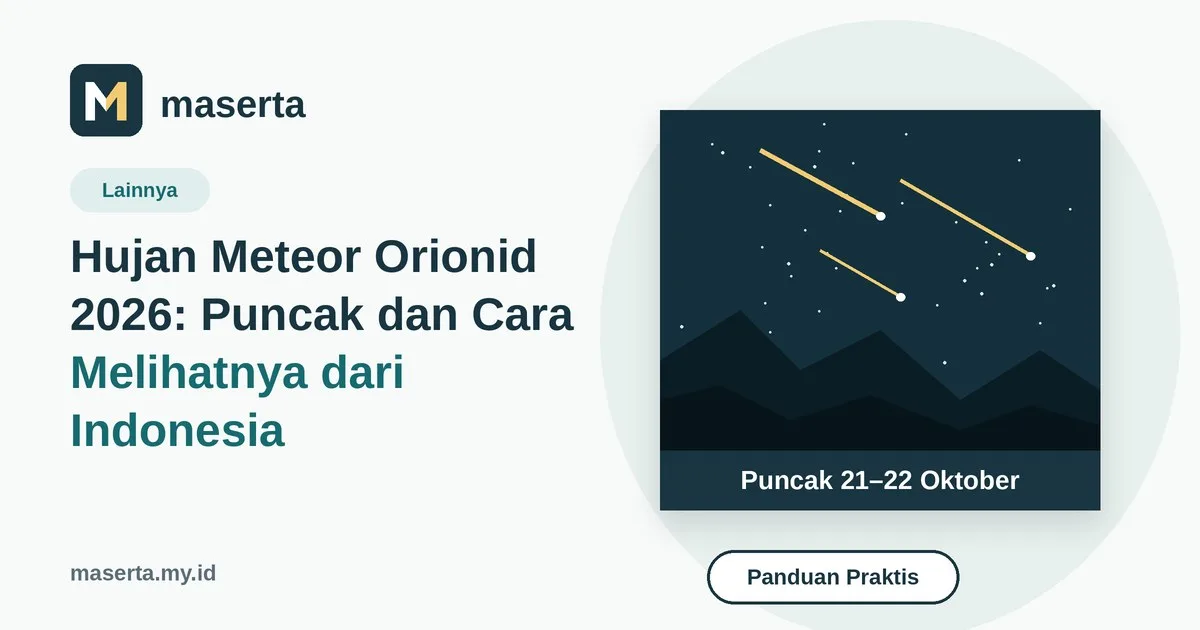
- Watch the night sky. Learn the planets and constellations with a star map app. Soon, the Orionid meteor shower will peak around 21–22 October.
- Visit a planetarium or science museum in your city; many offer shows for children and families.
- Follow rocket launches online. Many agencies and companies stream launches live.
- Read and learn. Libraries, science channels, and space agency websites offer easy-to-follow material.
- Do a project with your kids. Water rockets from used bottles, a model solar system, or a moon observation journal can make a fun weekend activity.
Why Space Deserves Attention
Space is not only a matter for scientists. Technology developed for space missions often trickles down into everyday innovation, and interest in science pushes young people to study math, physics, and engineering. World Space Week is a yearly reminder that curiosity about the sky can become the doorway to a career or a meaningful hobby.
Closing
World Space Week 2026, with its Rocket Revolution theme, invites us to see how rockets are changing human access to space and, ultimately, life on Earth. You do not have to wait until next October to take part. Start small: look at the night sky tonight, learn one new constellation, and ask your family to talk about what satellites do every day.